Wednesday, 6 April 2016

Ordsall Chord

Work to construct a new chord that will eventually connect Manchester Victoria and Piccadilly began in October 2015 after several years of debate, planning and legal wrangling. In fact the final legal challenge which had the potential to halt the project was not thrown out of court until March this year (2016).
It was hoped that the chord would be open by 2016 but the legal challenge has meant that the £85m project will not now be complete until late 2017.
The denial by the court for the projects main opponent Mark Whitby to appeal an earlier decision to throw out his case means that the project can now proceed at full pace. In late March (2016) an agreement was signed by Amey, Skanska, Bam Nuttall, and Siemens in partnership with Network Rail to deliver the project.
Approval to proceed with the chord constitutes a major step forward in the Northern Hub programme which aims to connect cities across the north with reliable, frequent and fast rail services. By connecting Manchester Victoria and Piccadilly together for the first time new service opportunities will arise and crucially capacity will be released with the ability to run through services from Victoria instead of having services terminate.

The new chord will link the Castlefield Junction line with the Deal Street Junction line, connecting Manchester's three main stations for the first time. The line must cross the A6042 Trinity Way, the River Irwel, Princess Bridge and bisect the line which currently connects the Museum of Science and Industry to the national rail network.

Looking south along Trinity Way toward where the new bridge will be constructed


The line will feature the UK's first Network Arch bridge, which will span the River Irwel and take the line over the Princess Bridge which provides pedestrian and cycle access between Water Street and Trinity Way.

The view from Water St looking toward where the bridge will cross the River Irwel
Since the start of work last year the main sites have now been established and piling is now commencing. A 10 day blockade of Manchester Victoria took place over the Easter period to allow the track between the station and the chord to be aligned along with other associated track works.

Admittedly there isn't currently a great deal to see on the ground other than the work sites and some piling work, but we will return in a few months to check on progress when the structures start to take shape.

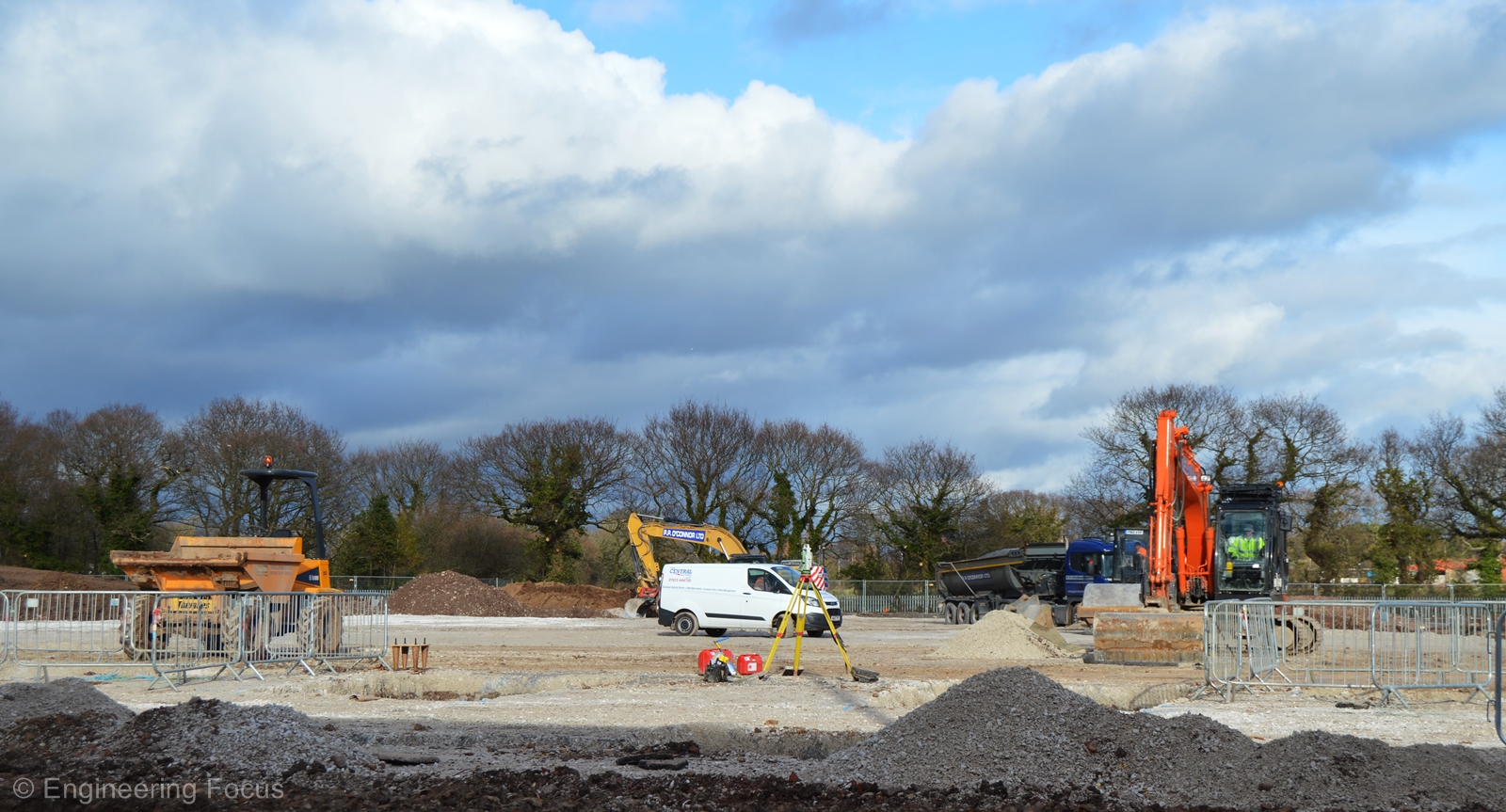
The main site located on the junction of Trinity Way and Water St


Follow us on Twitter - Facebook  For more information e-mail Blog@EngineeringFocus.co.uk


Tuesday, 29 March 2016

Mersey Gateway - March 2016 update

Work to construct the new bridge over the River Mersey is progressing well and all indications are the bridge will open on time in autumn 2017. Since our last update in October 2015, visible signs of the bridge construction have begun to appear, most notably the northern and southern pylons which will support the bridge deck are now slowly rising up from their foundations. 

Image taken on 15th of March shows the progress so far of the 3 pylons.


On the Widnes side of the River, progress is being made on the approach viaducts which will take traffic from the A553 toward the new bridge. So far 2 spans have been poured and are now visible, with the MSS (Moveable Scaffold System) in place ready for the 3rd span to be poured.

Construction of the approach viaduct making steady progress.

Close up of the MSS which was in place to construct the 3rd span.


Work in Widnes to connect the existing road network to the new bridge has reached a crucial stage, as of yesterday night (28 March 2015) the vital link which connects the current Jubilee bridge to the A533 was permanently closed. This important but disruptive closure will allow the engineers to construct a new flyover which will take traffic over Ditton junction and onto the new approach viaduct leading to the new bridge.

The closure of the existing flyover will mean that traffic which currently uses the free flow link from the bridge onto the A533 will be diverted onto Ditton junction itself, which has been remodelled to help ease the congestion that will arise from the closure of the flyover. This closure will now remain in place for the remainder of the construction phase until the opening of the new bridge in autumn 2017.

For more information regarding the closure click here

There will also be a number of weekend closures of the roundabout at junction 12 of the M56, this will allow engineers to safely continue to remodel the roundabout, with the majority of the work on the runabout complete by Summer 2016


For more information about the Mersey Gateway project click here


Image of the north pylon with the form travel at the base, which will eventually be lifted into place to construct the bridge deck

Image of the progress so far with Fiddlers Ferry power station in the background.


Follow us on Twitter - Facebook - Instagram For more information e-mailBlog@EngineeringFocus.co.uk

Sunday, 6 March 2016

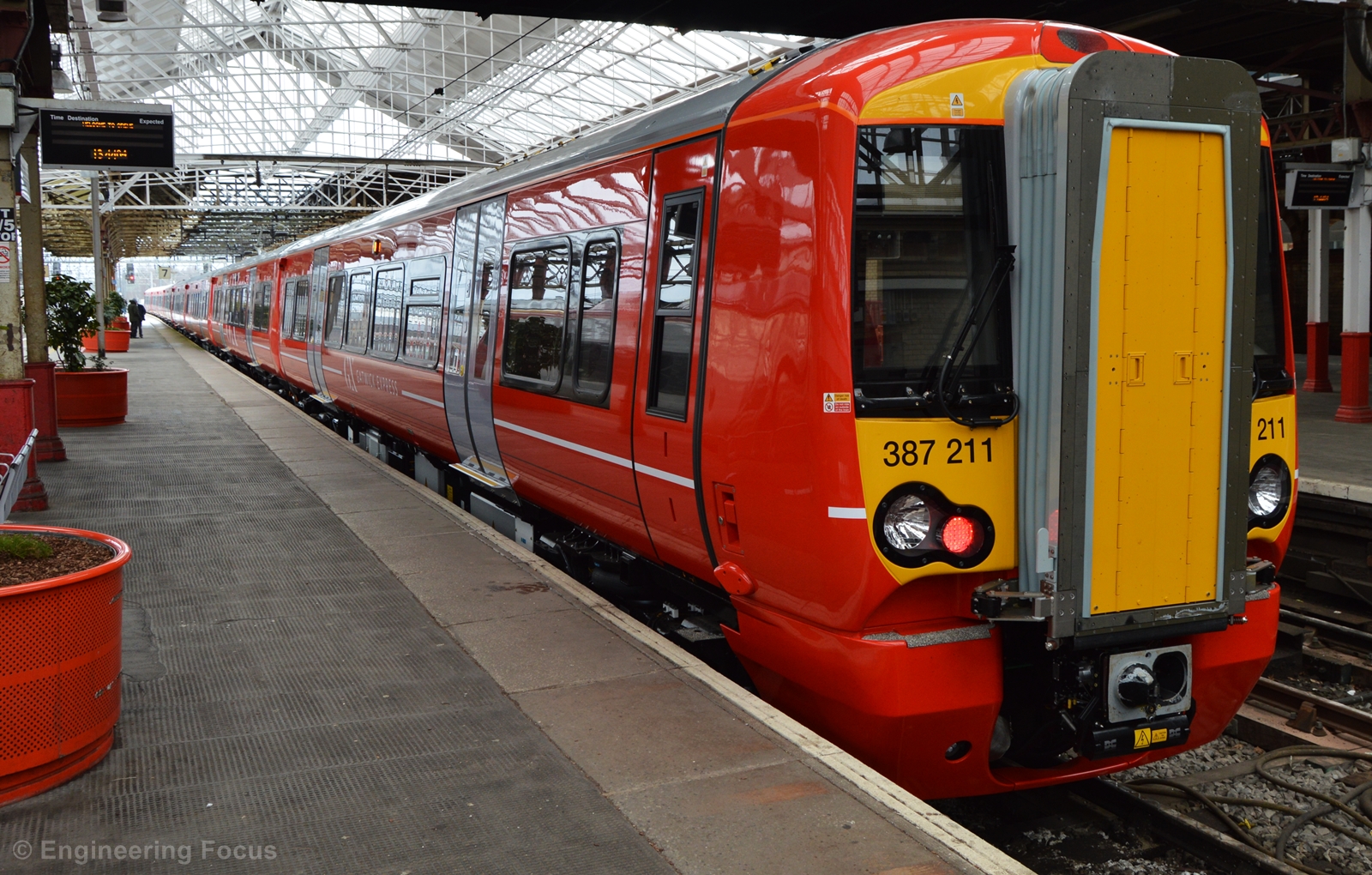
Gatwick Express class 387 on West Coast test

Below are a selection of images from the main line test of a pair of class 387 ElectroStars which will soon be working on the Gatwick Express route between London Victoria and Gatwick Airport.

At the time the units (387 211 and 210) were stopped at Crewe after testing on the West Coast Main Line. 

In all 27 four car Class 387/2s have been ordered to replace the class 442s which currently serve on the Gatwick Express route. The first 387 went into services on the 29th of February 2016.


Follow us on Twitter - Facebook  For more information e-mail Blog@EngineeringFocus.co.uk

Tuesday, 9 February 2016

Building a new High School - Neston High

In early January this year (2016) work began on a £25m project to build a new High School in Neston to replace the existing school building, parts of which date back to 1958 when the school first opened.

Planning for the new school began in 2014 when Morgan Sindall was chosen as the main contractor for the Pf2 batch of schools. The batch comprised of 12 schools of which Neston High was one, with a total value of £120m.

The plans for the school which include a new purpose built 3 story structure were first shown to the public at a consultation event held in September 2014. The plans were subsequently approved by the Borough’s strategic planning committee in January 2015.

The plans can be viewed on the local About My Area website for Neston.

The new building will be constructed on land already owned by the school and will not require the closure of or impede on the day to day running of the existing school. Some demolition was required of an old primary school which closed in 2003, it was taken over by Neston High School and become a Sure Start centre and provided space for extra curricular activities.

The only amenity the town will lose for a short while will be a the all weather sports pitch which is situated in between the town's Recreation Centre and the school building which has already been demolished. A new all weather pitch will however be constructed once enough land has been cleared and levelled to allow construction.

The new school building will in fact sit on-top of what was the all weather pitch, which as you will see from the pictures has already been removed ready for ground works to begin. To the rear of the Recreation Centre land is being levelled to make way for the new pitch. 

Construction work is scheduled to last 18 months and all being well the new school will open in 2017. Once complete the old school building will be demolished and the land will be used to make up for the sports fields which will be lost to the new building. 

View of the all weather pitch and Leonardo Centre in January 2016


Leonardo Centre being demolished in January 2016


How the site looked in February 2016 after a short demolition process

Land being prepared for the new all weather pitch which will eventually be constructed 


The old all weather pitch already removed and ground works are well underway.  


Follow us on Twitter - Facebook  For more information e-mail Blog@EngineeringFocus.co.uk


Monday, 18 January 2016

BBC Television Centre Redevelopment

In September 2010 the BBC made the announcement that they would cease broadcasting from Television Centre in 2013. The building was put onto the property market in November 2011, and was sold to Stanhope PLC on the 16th July 2012; for 200 million.

The image shows scaffolding covering Stage 6, along with excavators working on the new forecourt for the building.


A year later on the 31st March 2013, Television Centre (As it is now formally known) closed it's doors for the final time, to be redeveloped into housing, offices, restaurants, cafés and shops, along with a new branch of the private members club; Soho House.

Up until February 2015, Stanhope PLC along with the BBC under the joint venture 'Television Centre Developments' worked to clear the building of broadcasting equipment, at a cost of over £60 million. Once completed, demolition began.

Television Centre was originally built with 8 studios; as part of a 15 year lease to the BBC, only 3 studios will remain post-demolition, “Three of Television Centre's historic studios are being refurbished for the digital TV age and will be operated by BBC Studios & Post Production, a commercial arm of the corporation” Source: http://televisioncentre.com/

At the time of our visit, BBC worldwide, the BBC's commercial subsidiary, had moved in to their new home in the old BBC news centre. Pictured below.

        The former home of BBC News (which moved to BBC Broadcasting house in March 2013) is now home to BBC Worldwide.

The BBC originally planned to move back to Television Centre in march of last year (2015), then the BBC announced that they will not be recommencing production in studios 1,2 and 3 until 2017, when most of the groundwork and demolition is complete. The redevelopment of Television centre follows with a multi-million pound regeneration within white city, with expansions to Westfield shopping centre, 5,000 new homes and new underground and overground stations within the area.

The plans for television centre include:
  • 950 new homes in the form of apartments and penthouses, within the listed circular building (more commonly known as the 'Doughnut'), a new tower, and other various locations around the site.
  • A 47-bedroom hotel at the front of the building, operated by Soho House
  • A mixture of independent cafés and restaurants
  • 500,000 sq ft of grade A offices, (with BBC Worldwide already in tenancy as of March 2015)
  • Finally, as before mentioned, 3 refurbished television studios operated by BBC Studios & Post Production

We hope to revisit Television centre in the coming months, and update on the redevelopment of this world famous building.


Television Centre pictured in April 2015


Follow us on Twitter - Facebook  For more information e-mail Blog@EngineeringFocus.co.uk


Tuesday, 12 January 2016

A556 Knutsford to Bowdon - January 2016 update


It has been 4 months since I last visited the project to construct a new dual carriageway connecting the M56 and M6 between Knutsford and Bowden. During my visit in August (2015) a considerable amount of earth works had been carried out, however no structures were yet visible. Over the past few months however several bridge structures have been constructed and now are clearly visible. 

Starting at the M6 end of the project, the bridge pictured below will take the new A556 alignment over Old Hall Ln before approaching the junction for the M6.

[Click image to enlarge]

Travelling north, the bridge piers shown below will carry A50 Warrington Road, which will be re-aligned at this point to pass over the A556. 

A new roundabout will also be constructed on the A50 to allow traffic to join the northbound A556.


One of the more advanced work sites is located at Millington Lane where a new bridge is being constructed to carry the lane over the A556.

The lane will have to be re-aligned north in order to pass over the A556 on the new bridge. 

Below are some pictures taken of the new bridge beams which had been lifted into place that morning. By the afternoon worsening weather conditions meant that the final lifts had to be postponed.


The piers shown below will eventually take take the new A556 alignment under a bridge which will be used to create a new grade separated junction bypassing the roundabout at Bowdon. 

The new junction will comprise the existing runabout wich will connect the A56 Dunham Road which heads in the direction of Altrincham, the A56 Lymm Rd, the nortbound exit slip from the A556 and the northbound entry slip which will carry traffic onto the M56

A new round about which will join onto the existing roundabout via a bridge over the A556 will provide a southbound entry slip onto the A556 and the southbound exit slip form the A556/M56. The new roundabout will also provide access for Yarwoodheath Lane.


The map below should help better show the positioning of the new A556 alignment and the several bridge that will have to constructed to carry a number of roads either over or under the new dual carriageway. 


The weather remained wet for most of the day during my visit but luckily there were some gaps in the weather so that I could take some pictures. The weather hasn't hampered construction as the main earthworks were wound down over the winter months with work focusing on drainage and the construction of the bridge structures. 

Some earth works were taking place during my visit but the majority of the moxys (articulated dump trucks) had been stood down over the winter. It is clear from some some of the images below that operating the moxys in these wet conditions would of been difficult at best. 

Large pumps could be seen positioned around the main work sites to keep water out of areas were it was not wanted. 

One of the work sites at Old Hall Lane, facing north.


Looking south from the A50, the moxys stood down, a different sight to that witnessed in August when they were busy carrying earth over the A50 under traffic light control.

Looking north from the A50, some work continues but at a less frantic pace than back in the summer. 

Looking south from Millington Lane, the alignment for the A556 taking shape,

Work continues on the existing A556 to prepare the road for the new alignment and to strengthen the existing bridge which carries the A556 over the M56,

Work continuing on the construction of the new grade separated junction between the A556 and M56 


More information and update can be found on the Facebook page for the project


Follow us on Twitter and Facebook. For more information e-mail Blog@EngineeringFocus.co.uk

Tuesday, 15 December 2015

Northern Powerhouse: Rail franchise announcement

On the 9th of December 2015 the DfT finally revealed who will be operating rail services in the North from next year. Prior to the announcement the future of rail services in the North looked uncertain, with a number of trains being moved South with no obvious replacement.

However the DfT's announcement contained a few pleasant surprises. The main surprise being that the North will see the arrival a greater number of new trains by 2019 than originally anticipated.  The number of new carriages announced has jumped from 120 prior to this announcement to over 500. The Dft also confirmed that Pacers will be removed all together by 2020

Our previous estimate for carriages in the North up to 2020 with the removal of Pacers gave the region an overall reduction of carriages of 3. However with this announcement the North so far could see a possible overall gain of 378 by 2020.

Updated carriage assumptions (click to enlarge)

The Transpennine franchise is to be retained by First who will operate the franchise until March 2023. First have promised to introduce 44 new 200km/h trains comprised of 5 cars. With the new trains they will introduce new direct services to Scotland from Liverpool.

Services from Liverpool to Glasgow will begin from December 2018 and existing services from Liverpool to Newcastle will be extended to Edinburgh from December 2019.


The current Northern Rail franchise which is currently operated by a joint venture between Serco and Abellio will from next be operated by Arriva Rail North. Like First, Arriva have promised new trains and say they will introduce a total of 281 new carriages comprised of a mixture of new DMUs and EMUs from 2019.

End of the line for unpopular Pacers

The new trains will help to bolster capacity on busy routes, aid the removal of Pacers and enable the introduction of new services. The new routes which will be launched from 2019 include: 

"New direct journeys from Bradford to Wakefield, Sheffield, Nottingham, Liverpool and Hull; from Leeds to Chester and Bridlington; from Lincoln to Leeds; and from Manchester Airport to Warrington, Bradford and Halifax" DfT

Arriva will also introduce a new high-quality ‘Northern Connect’ service, which will provide longer-distance services, with faster journeys and stations staffed daily with catering services and free Wi-Fi.


So is the promised Northern Powerhouse finally beginning to take shape? 


To see how your journey could benefit check out the Interactive map on the DfT's website


Follow us on Twitter and Facebook. For more information e-mail Blog@EngineeringFocus.co.uk

Latest blog post

HS2 Bridges and Viaducts Engineering Challenges

A version of this article was published in RAIL Magazine issue 1040 Construction of the 220km (140 mile) long HS2 route between London and ...