Showing posts with label Liverpool Lime St. Show all posts

Monday, 20 May 2019

Halton Curve passenger services commence

Today marks the official launch of direct rail services between Wrexham General and Liverpool Lime St via Liverpool South Parkway, the first direct rail link between North Wales and Liverpool since the mid 1970s. From today there will be 1 outbound service from Wrexham General per day departing at 06:35 and 2 return services departing Liverpool Lime St at 17:37 and 20:14. The service is in addition to the new hourly service which will depart from Chester. The service departing from Chester will call at Helsby, Frodsham, Runcorn, Liverpool South Parkway (for Liverpool Airport) and Liverpool Lime St, with a journey time from Chester of around 55 minutes.

Services between Chester and Liverpool Lime St actually began on Sunday (18th May 2019), which is when I took my first trip over Halton Curve. I picked up the service at Frodsham as I had some shots I wanted to capture in Runcorn upon my return. The trip out was on a humble class 150, but with new seating, disabled access toilet and charging points it wasn't bad at all. The return was made aboard a class 158 in smart Transport for Wales Rail colours and was a bit of a step up from the 150. I'm not sure if the 158 will remain on the route, or if it will be worked solely by 150s once attention from the press has gone.

Class 150 upon arrival at Liverpool Lime St [click to enlage]

One passenger I spoke to was under the impression that the route was to be operated by new trains, but that is not to be unfortunately. I'm not sure which units will operate on the service once the new trains being built by CAF are delivered. However what I am sure of is that no matter what train serves the route, passengers are happy to finally be able to get to Liverpool from Helsby and Frodsham by train, without having to drive to Runcorn, Ellesmere Port, or even Hooton.

Class 158 at Liverpool Lime St
 
Below is a short video montage I put together with some clips of the highlights of the trip.


It is hoped that the new service will remove some traffic from the often congested M56 which connects Chester and West Cheshire to the M6 and Manchester. The service will increase the number of services between Frodsham, Helsby and Chester from just 1 to 2 trains per hour. The service will also provide improved links between Chester and Liverpool Airport which can be accessed via a regular bus service from Liverpool South Parkway.

The new service between North Wales and Liverpool has been made possible thanks to an £18m upgrade of Halton Curve and recent improvements made to Liverpool Lime St. The funding was part of a larger £340m package of upgrades that took place across the Liverpool City Region.

Regular passenger services had operated over Halton Curve up until the mid 1970s, when, despite avoiding cuts made by Beaching, services were withdrawn. Then in 1994 the 2.4km double track line was reduced to a single track, and at the same time the points which allowed south bound trains to use the line were also removed in a bid to reduce costs of maintaining the Liverpool branch of the WCML. Since then the only service which had used the line was a single Parliamentary train each Saturday during Summer, between Chester and Liverpool, operated by Northern.

TfW class 158 travelling over Halton Curve on route to Liverpool


The North Cheshire Rail Users Group, which represents passengers using services on the Manchester-Chester line (part of The Birkenhead Railway) had been campaigning tirelessly for over 20 years to re-instate Halton curve, and in April 2016 their hard work finally paid off, when it was announced that the junction on the WCML would be re-instated, allowing bi-directional traffic to use the line once more.

On the 14th of July 2017 work began to upgrade a short 2.4km section of railway, which involved installing a new crossover and 60km/h turnout on WCML. In addition signalling was also upgraded on the WCML, with control transferred from Halton to Manchester Rail Operating Centre . Work was also carried out to re-signal the Frodsham area and fit a new modern signalling panel at Frodsham Signal box

Halton Curve route map

Details of the signal upgrades are as follows. (source NCRUG)
  • New relay based interlocking and re-signalling of existing Frodsham control area with LED colour light signals and train detection provided by track circuits;
  • Revised signalling arrangements at Frodsham/Halton/MROC to accommodate the bidirectional signalling using TCB
  • Retain the existing method of Absolute Block Working from Frodsham to Helsby Junction and Norton Signal Boxes 
  • Replace the existing mechanical lever frame at Frodsham and replace with an Independent Function Switch (IFS) panel; and • Install OLE overrun protection from Halton Junction.
The upgrade was actually completed in time for the timetable change in December 2018, however due to the lack of available DMU stock passengers have had to wait until now (May 2019) for the new service to commence. But now (finally) passengers can travel direct from North Wales to Liverpool and it is hoped that eventually in the future there will be more services will between North Wales to Liverpool. There is also talk of a Liverpool to Cardiff service which will also use Halton Curve.

It would seem that after the disaster that was the December 2018 timetable change, that passengers are finally starting to see the benefits of years of engineering works and the introduction of new and cascaded rolling stock.


Follow me on Twitter and Facebook

 For more information 
e-mail info@EngineeringBlog.co.uk


Thursday, 21 March 2019

Rail & the Liverpool City Region - The Track to Growth

This week I was fortunate enough to be invited to an event in Liverpool called “Rail & the Liverpool City Region - The Track to Growth”. The event was an opportunity for city, transport and business leaders to publicly give their full backing to Transport for the North's (TfN) Strategic Transport Plan (STP), and it was also an opportunity to celebrate 5 years since the formation of the Liverpool City Region, and the £340m that has been invested in rail over that period.

As part of the STP, Transport for the North have set out £40bn worth of investment in rail which amongst other things will see Liverpool connected to HS2 and Manchester by a dedicated 2 track high speed line. This is something the city has been demanding since the route of phase 2 between the West Midlands and North West was announced. Whilst business and political leaders have been supportive of HS2, with benefits coming to the region from 2026, they were never fully satisfied with Liverpool's connection to HS2 being as far south as Crewe.

Rather than seeing HS2 connectivity as an insurmountable challenge the LCR and TfN have worked together to see how HS2 could be extended and integrated with a new line which provides Liverpool with direct connectivity to HS2, but also to Northern Power House Rail heading east to Manchester and Leeds.

Also this week a proposal was put forward for a new railway station to be built within Liverpool city centre, which would be connected to NPR. The new station would ideally have platforms 400m in length to take full advantage of the new longer trains that will be used on the HS2 core network. Currently Liverpool Lime St is limited to trains of around 260m in length (the length of an 11 car Pendolino). Lime St is also about to reach the limits of its capacity, this despite the recent the upgrade to the track approaching the station and the construction of a new platform. Very soon new services to Scotland and to Chester via Halton curve will consume the new capacity created. HS2 itself will also introduce 2 new services each hour to Euston from 2026. Therefore city leaders say that it is vital that Liverpool gains a new station and dedicated connection to HS2 and Manchester via NPR.


LCR estimates the HS2 link could provide £15bn worth of economic benefits and attract an additional 3.9m visitors per year to the region. Claire McColgan MBE Director of Culture Liverpool spelled out just how important having good transport links is to the tourism economy in the region, but also how vital tourism and culture are to the region's economy. Ms McColgan made it clear that event organisers want to host events in the LCR “because they know that the city transport sectors work together”. Pointing to success stories such as the Giants Spectacular last year which attracted 1.4m visitors across Liverpool and the Wirral, and the sailing of the 3 Queens along the River Mersey, which saw 1m people line the River on both sides to see the ships sail in.

Liverpool City Region

The event wasn't focused solely on the STP, it was also a good opportunity to celebrate some of the success stories over the past 5 year, since the formation of the LCR. The LCR led by by Metro Mayor Steve Rotheram brings together Liverpool City Region’s six local authorities – Halton, Knowsley, Liverpool, Sefton, St Helens and Wirral working in cooperation to tackle issues that face the region. Not just transport for but housing, skills and Energy. In terms of transport though the LCR was able to bring together local transport plans, Network Rail's RUS and the needs of businesses to identify key infrastructure improvements that were required to help unlock the potential of the region.

The result of the collaborative approach was a £340m package of measures that would improve rail connections across the region and would help to enable new services and improve reliability. The largest of the measures was the work undertaken at Liverpool Lime St, but improvements were not focused solely on the city centre. A long held aspiration to re-instate bi-directional running at Halton Curve linking the North Cheshire railway to the WCML at Runcon has been realised, and a brand new station named Maghull North has been constructed.

Metro Mayor Steve Rotheram


Shortages of rolling stock has meant that services using the now complete Halton Curve have been delayed, but it is hoped that Transport for Wales Rail will begin to operate services between Chester and Liverpool, calling Helsby, Frodsham, Runcorn and Liverpool South Parkway in May this year.

Skills

It is clear that Liverpool transport, business and political leaders fully support HS2 and the TfN STP, but a word cropped up again which has the potential to threaten any future investment, that word was skills. Echoing the challenges outlined by the NRIL – Building New Railways report, Northern Powerhouse Rail Director Tim Wood made it clear that "the major risk to the programme is not money, it is skills” (or the lack there of). This is something I have written about for many years, in fact I first wrote about the skills gap back in 2015 when it emerged that GWML electrification was going to be delivered late and over budget, and that electrification of the Transpennine route was to be "paused".

What was true in 2015, unfortunately is still true today, we simple do not have enough skilled engineers in the UK to undertake the work that is necessary to get the North moving. It is frustrating in a number of ways, one because it seems as if people read on a daily basis in the main stream media, that the government should cancel HS2 and invest in the North and how it will solve all of our problems, but it just wont. And it's frustrating because we should be getting on with building infrastructure in the North, but we can't, not yet.

Let me give a example of why cancelling HS2 today would not improve railways tomorrow. In simplified terms HS2 is new railway and as such is moving towards the heavy civil engineering phase in which earth is moved, tunnels are excavated and structures are built. This requires a certain type of engineering skill set, such as earth work contractors and tunnelling experts. If they stopped work today and were moved up north to build something, what would it be? There are no detailed plans for NPR, no shovel ready civil engineering projects for them to begin work on.

What people might be thinking when they say “improvements” are upgrades, which is understandable, but those tunnellers and earth work engineers aren't correctly skilled to then start upgrading the railways. Most of the egineers who are correctly skilled to upgrade our railways are already doing so. Tens of thousands of them working tirelessly usually at night to improve Britian's railways.

Now I know it is probably a bit over simplified, but it does demonstrate that you simple can't down tools on one project and start another, and especially not by just throwing money at it.

The skills gap is going to take years to fill, and while good progress is being made with universities working in cooperation with TfN and NRIL and the formation of National High Speed Rail college, there is still a long way to go. Getting children ready to become the engineers of tomorrow needs to begin in primary and secondary schools.

We cannot allow there to be another lost generation like mine, which was told university is the only avenue available to you if you want any sort of career. I know in my school careers in science, education and IT were promoted, but the idea that you could have a successful career in engineering just never came up.


One last word on HS2, it was clear from yesterday's event that the LCR and TFN who represent 19 local transport authorities from across North thoroughly reject the notion that we should scrap HS2 and invest in the North instead. Tim Wood spelled out the message from TfN again "Let me be clear, we absolutely need HS2". The simple fact is we need both HS2 and NPR.


Follow me on Twitter and Facebook

 For more information 
e-mail info@EngineeringBlog.co.uk

Wednesday, 6 March 2019

The End of Pacers (And 'that' documentary)

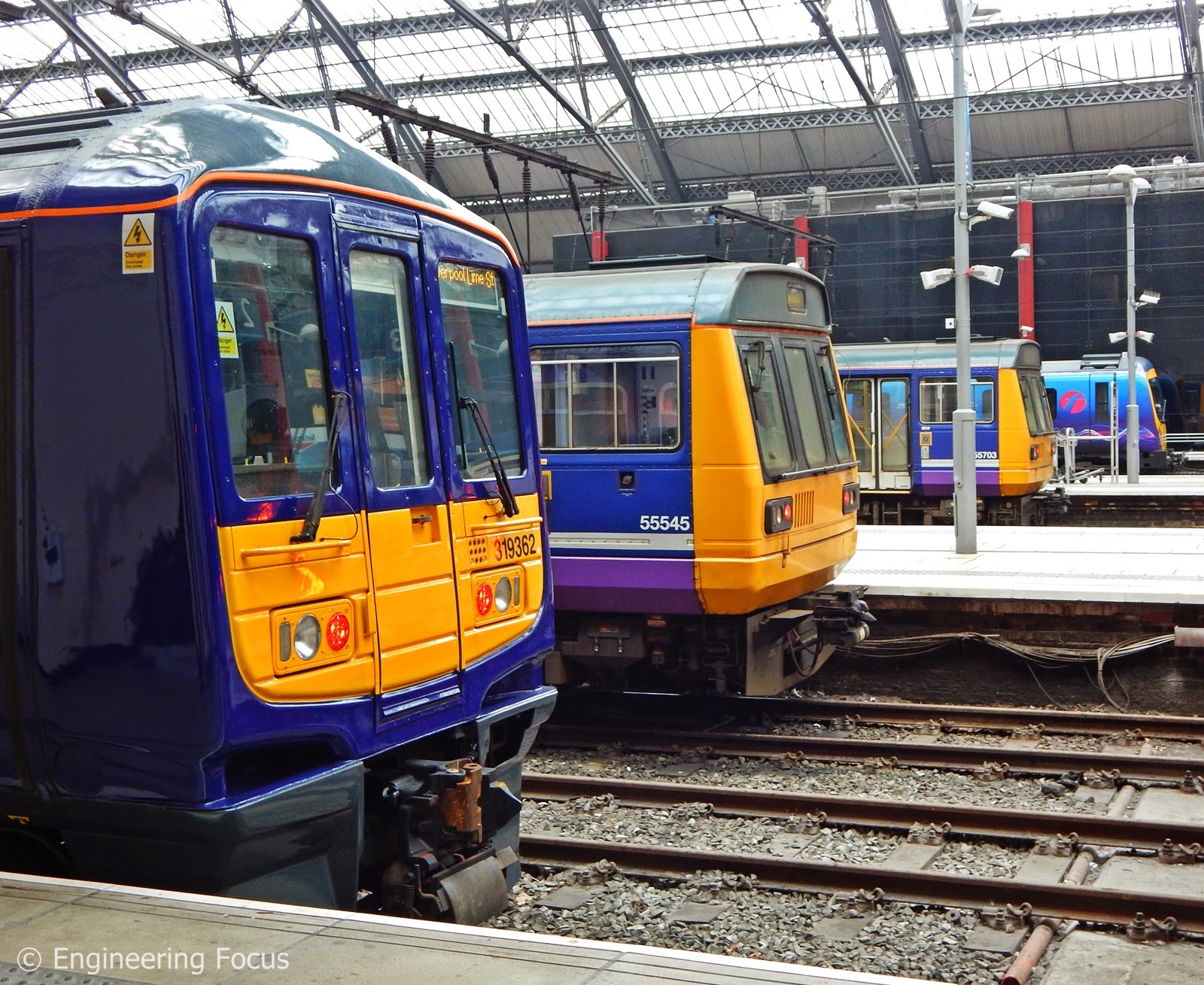
Pacers (class 142/144s) have become the trains that passengers love to hate and the mainstream media loves to use as a weapon to attack government policy with. Now however the end is in sight for the units which are now over 30 years old. By the end of this year (2019) the entire fleet of Pacers operated by Northern will have been phased out. In order to achieve this new trains are being built and some existing trains are being delivered as they come off lease from other operators.

The good news for passengers is brand new trains are on the way, the introduction of which will see the phasing out completely of Pacers on routes operated by Northern. It is unfortunate however that the introduction of the class 195 DMUs has been delayed. The first class 195 was delivered to Northern for testing in June 2018, and it was expected that it would enter service in December 2018. Unfortunately during testing faults were found, and it wasn't until December 2018 that the units were cleared for passenger use. As far as I can tell driver training on the class 195s didn't begin until February this year, with Northern now saying the new trains will begin to enter passenger service in early 2019.
  
[Click to enlarge]
Northern class 142 at Chester Station

Class 195s aren't the only new trains being delivered to Northern, the operator is taking delivery of new class 331 EMUs which should also begin to enter service this year. Although Northern will eventually have 98 new trains in service, that doesn't mean that Pacers are to be replaced by the new trains. Some older units such as class 150/6/8s, 170s and 319s will remain in service with the 150s replacing Pacers. However Northern's train refurbishment programme which had refurbished the 100th train in February is completely transforming these units. Existing trains will feature upgraded seating, disabled access controlled emission toilets (to comply with PRM TSI rules which come into force in 2020) new floor coverings and LED lighting which will provide “a lighter and brighter on-board environment”. In total 243 units operated by Northern will be refurbished.

Refurbished class 319 interior 

All this is great news for passengers who have been waiting a long time for improvements to materialise. Delays in the arrival of new trains and the May 2018 timetable fiasco has meant that passengers have had a tough time and have rightly felt annoyed. However change on this scale is never easy and Northern can't be held fully responsible for the May time table chaos, which was down to a catalogue of failures rather than the fault of one organisation.

'That' documentary.

The fact that brand new trains are on the way hasn't stopped some in the media from using Pacers to attack government policy, specifically over the construction of HS2. I couldn't bring myself to watch the now infamous Dispatches documentary, however the premise as far I could gather was, that the government should invest in the North rather than building HS2. Now I could go on at length why this is wrong on many levels, but I'm more interested in the fact that it seems as if the old Pacer was again used as an example of under-investment in the North. Had this “documentary” been made just 12 months later, say mid-late 2019, the one weapon that was eagerly wielded would no longer exist, at least not on routes operated by Northern. Instead what Liam Halligan who wrote and presented the documentary would have found was a mix of brand new trains and existing trains which have been refurbished to a high standard.

Recently refurbished class 150 at Liverpool Lime Street

Even in late 2018 Halligan could of stood in Liverpool Lime St and explained that it had recently undergone a huge upgrade (part of a wider £340m investment in the Liverpool City region), next to a recently refurbished electric class 319 with 4 cars, which are quiet and spacious, and a world away from the Pacers which are being phased out. But no, the focus was on the old Pacer and the unhappy passengers who have had to endure them for decades.

Longer platforms at Liverpool Lime St
 

I didn't really want to get drawn into writing about the Dispatches documentary, but it is programmes and news stories like this that really annoy me. Forget the tenuous HS2 or Northern investment argument, what gets my back up is mainstream media's continued insistence on focusing only on the negative when it comes to the railways despite of the facts, which are clearly there for all to see.

Refurbished class 319 at Liverpool Lime Street 
Now I know new and refurbished trains won't make up for the lack of investment in the North but they will go a long way to providing passengers with the modern, fast and reliable service that they deserve. With Pacers gone, maybe class the class 150s, which despite being fully refurbished, will themselves be over 30 years old, will be the mainstream media's next target. One thing is for sure attacking train operating companies over the how old their trains are and calling for HS2 to be cancelled will not mean that Northern Powerhouse Rail is built any faster.


Below are just a few links to blogs that I have written about improvements in the North that are already, or will soon be benefiting passengers


Follow me on Twitter and Facebook

For more information
e-mail info@EngineeringBlog.co.uk


Thursday, 2 August 2018

Liverpool Lime Street transformation


Liverpool Lime Street station fully re-opened on the 30th of July after an 8-week closure to allow for the upgrade of track and alterations to platforms to be made. The closure was the second phase of a major upgrade, with the first having taken place during the Autumn last year.


The upgrade of Liverpool Lime St is part of a larger £340m upgrade plan which will vastly improve rail services within the Liverpool City Region. The work undertaken at the station is an essential element of the scheme which will allow an additional 3 services per hour to call at Liverpool Lime St. The work will facilitate the introduction of 2 new services both of which are due to begin operating from December 2018.

A new hourly service to be operated by KeolisAmey (Wales and Borders) will serve Liverpool South Parkway, Helsby and Frodsham. This service which is due to begin in December 2018 is being made possible with the upgrade of Lime St and work to bring the Halton Curve back into full use. 

The other service operated by Trans Pennine Express is due to begin operating from December 2018 and will provide a direct service between Liverpool and Glasgow. 

The new services are being made possible with the construction of a brand new platform and upgrades to the track approaching the station. Control over signalling is also being diverted to a new central control centre.

Virgin Pendolino departing Platform 9

The most noticeable change for passengers will be the remodeled platforms. Platform 0 has now been removed, platforms 1 and 2 are still in the process of being extended, whilst platforms 3 and 4 have been widened. Platform 6 has been realigned and new platforms for 7 and 8 have been constructed. Lastly, platforms 9 and 10 have been extended, with 11 car Virgin Trains services now using platform 9.

Old meets new. Deliberate clear definition between old brickwork, repairs, new brickwork 

Another noticeable change for passengers using Virgin Trains services is the relocation of the First Class lounge and customer information desk. Currently both are located within a new structure located on the main concourse. However The White Star pub which was located above M&S Simply Food has now gone to make way for a new First Class lounge. It is not clear if the current structure on the main concourse is temporary or will be altered once the new lounge opens.


Key Facts:

1 million hours worked.
2.9km of new track installed.
16,000 tonnes of ballast used.
11km new overhead line wiring installed.
26 new signals installed.


Final works will take place on the 2nd of September and 14th of October and will see platforms 1 and 2 come into full use. Once complete the works will allow for new and more reliable services, the new and reconfigured platforms will also allow an increasing number of passengers to use the station more safely.


More information is available on the Network Rail website.


Follow on Twitter and Facebook

 For more information 
e-mail info@EngineeringBlogco.uk
Call: 07393 565 863


Thursday, 5 March 2015

Northern goes electric

Today (05/03/15) was a significant day for commuters from the North West as Northern Rail officially launched electric services between Liverpool and Manchester.  For the majority of commuters it will be just a normal day, they may notice the freshly painted train waiting for them at the platform, they may notice the lack of engine noise and the fresh new interiors. But for the many they will be surprised to find a seat, apart from this their day will go on as normal.

For businesses, Northern Rail, transport workers and enthusiasts however this is a momentous day. The culmination of years of hard work by Network Rail, Northern Rail and those who have lobbied for electrification over the years.

The electrification of the line between Liverpool and Manchester, and the introduction of new electric trains is just the start of a programme of electrification which will benefit millions of commuters across the region as other lines go live. 

Liverpool, Wigan, Preston and Blackpool services are all due to go electric over the coming years, with electric trains steadily heading north for refurbishment and introduction on Northern routes. For more information about North West electrification click here

The trains

The electric services themselves may be new to the region, but the trains are not. In fact the class 319s that are being introduced have been in service in London since the 1980s. This has lead to accusation by some that the trains are "cast offs from the south"

I'm delighted to say however, that they certainly do not feel like "cast offs". The trains are a world away from the diesels that they are replacing. All trains entering service with Northern will be refurbished and given a new coat of paint making them look fresh and modern.

The trains on the inside are not what you would describe as luxurious, there are no tables and have 3 + 2 seating in places, however they are ideally suited for carrying people the short distances into Manchester and Liverpool in relative comfort.

The seats are comfortable enough and the ride is quiet, apart from the odd clatter from an air compressor. The train feels comfortable at speed with none of the engine noise of the older diesels and with very little buffeting.

The ride is now comparable with the more modern diesel trains used by Trans Pennine Express, with the only draw back being a lack of tables. Otherwise there is nothing to choose between TPE's modern diesels and Northern's electric trains if you're travelling between Liverpool and Manchester.


Perhaps it would be nice if we in the North received new electric trains, but the new electric services being introduced provide a step change in comfort, capacity and hopefully speed that should not be scoffed at.


Latest blog post

HS2 Bridges and Viaducts Engineering Challenges

A version of this article was published in RAIL Magazine issue 1040 Construction of the 220km (140 mile) long HS2 route between London and ...