Showing posts with label class 319. Show all posts

Thursday, 20 June 2019

RailLive 2019: UK's first passenger carrying hydrogen train

In 2018 the UK Government announced its intention to phase out “diesel-only” trains from the UK rail network by 2040. An ambitious target which would be nearly impossible to achieve through electrification of the rail network alone. According to the DfT in 2009 just over 5000km [1] or roughly 33% of the UK's rail network was electrified, since then, and despite a wide spread programme of electrification between 2014 and 2019, that figure has only increased by an estimated 1000km. Given that the length of the UK rail Network is 16,000km, Network Rail would have to electrify 500km of railway every year for the next 20 years to electrify the remaining network by 2040. Considering it has taken 5 years and cost in the region of £4-5bn to electrify just 1000km of railway you can see how this would be a challenge to say the least.

This means then, that the challenge to phase out diesel-only trains by 2040 has been passed to train manufacturers and rolling stock leasing companies (ROSCOs). I'm fairly certain there will be some diesel-only trains still in operation after 2040, as Northern's class 195s which are being delivered now and Transport for Wales' new units which wont be delivered until 2021 will be powered solely by diesel. It is inconceivable that the government would force ROSCOs to scrap or re-engineer rolling stock which will be 20 years old or less by 2040, that would be wasteful and expensive. However the challenge faced by ROSCOs and manufactures is to develop new ways to power trains between now and 2040.

Luckily it seems that companies and organisations in the UK are well on the way to developing new power technologies which will eventually put an end to diesel-only trains, whilst not requiring the electrification of the entire UK rail network. Vivarial displayed a battery version of their D-Train at RailLive last year and has since gone on to develop a fast charging solution, which can charge a set of batteries in 8 minutes, providing a range of 60 miles. I will be writing more about that in a future blog.

Porterbrook Leasing have also been developing their own upcycled, re-engineered rolling stock based on the class 319 of which 84 were built. Porterbrook already has orders for a tri-mode class 769 variant of what they call their “Flex” units, which are currently having diesel engines fitted, allowing them to switch between DC, overhead and no-electrified lines. Transport for Wales, Northern and Great Western Railway are expecting units, with a total of 38 units on order.

Not content with converting 319s to tri-modes, Porterbrook, working in collaboration with The University of Birmingham’s Centre for Railway Research and Education (BCRRE) have developed the UK's first hydrogen powered train. The first “HydroFLEX” unit was demonstrated at this year's RailLive event, taking passengers gingerly along a section of track at the Quinton Rail Technology Centre.

You can see a short video of the HydroFLEX in action below
 
The unit on display was powered by a singe 100kw hydrogen fuel cell combined with a 100kw battery and was carrying 20kg of hydrogen. The next step is to fit the unit with 2, 100kw fuel cells and 2, 100kw batteries, before beginning testing on the mainline. The unit will be able to hold 200kg of hydrogen in total, which it is estimated should be enough to power the unit for 1600km. The fuel cells and tanks, as well as the control systems are all housed in 1 of the 4 carriages.

Fuel delivery system

The first public outing for the HydroFLEX has caused quite a stir, with the BBC attending to film the train in action and to interview those involved. The team from Porterbrook, BCRRE and Fuel Cells Systems who supplied the hydrogen were busy ensuring that everything ran smoothly and were on hand to answer any questions.

Alex Burrows, Director at Birmingham Centre for Railway Research and Education, commented: “This is a great success story for the UK Rail Industry, which shows our capability and commitment to helping the government meet decarbonisation targets. Key to this success is the close partnership between academia and industry which has enabled us to pool the expertise needed to rapidly progress this technology from concept to full-scale working demonstrator.”


The demonstration seems to have been a real boon for the UK rail industry, generating positive news for the industry which doesn't always get an easy ride from the mainstream media. The HydroFLEX demonstrates that the UK rail industry can deliver innovative solutions to looming challenges, and that the UK can be a world leader in the development of alternative power systems for rail vehicles.

The fuel cells and batteries themselves are based on tried and tested technology, and have been sourced from around the world. What makes the HydroFLEX innovative is the control system being developed by BCRRE. The complex control system must work seamlessly to balance fuel delivery and energy output, whilst monitoring the battery and energy recovery through regenerative breaking. The system is what brings everything together to make the HyrdoFLEX a unique and world leading train.

Although powering trains with hydrogen fuel cells may not be the only answer to removing diesel-only trains from the UK rail network, it is one solution that could help the government deliver its 2040 promise. Apart from the remaining class 195s and Civity based DMUs to be delivered to TfW, which should end their service some time around 2050. 

[1] https://webarchive.nationalarchives.gov.uk/20090805225151/http:/www.dft.gov.uk/pgr/rail/pi/rail-electrification.pdf 

Follow me on Twitter and Facebook

 For more information 
e-mail info@EngineeringBlog.co.uk


Wednesday, 6 March 2019

The End of Pacers (And 'that' documentary)

Pacers (class 142/144s) have become the trains that passengers love to hate and the mainstream media loves to use as a weapon to attack government policy with. Now however the end is in sight for the units which are now over 30 years old. By the end of this year (2019) the entire fleet of Pacers operated by Northern will have been phased out. In order to achieve this new trains are being built and some existing trains are being delivered as they come off lease from other operators.

The good news for passengers is brand new trains are on the way, the introduction of which will see the phasing out completely of Pacers on routes operated by Northern. It is unfortunate however that the introduction of the class 195 DMUs has been delayed. The first class 195 was delivered to Northern for testing in June 2018, and it was expected that it would enter service in December 2018. Unfortunately during testing faults were found, and it wasn't until December 2018 that the units were cleared for passenger use. As far as I can tell driver training on the class 195s didn't begin until February this year, with Northern now saying the new trains will begin to enter passenger service in early 2019.
  
[Click to enlarge]
Northern class 142 at Chester Station

Class 195s aren't the only new trains being delivered to Northern, the operator is taking delivery of new class 331 EMUs which should also begin to enter service this year. Although Northern will eventually have 98 new trains in service, that doesn't mean that Pacers are to be replaced by the new trains. Some older units such as class 150/6/8s, 170s and 319s will remain in service with the 150s replacing Pacers. However Northern's train refurbishment programme which had refurbished the 100th train in February is completely transforming these units. Existing trains will feature upgraded seating, disabled access controlled emission toilets (to comply with PRM TSI rules which come into force in 2020) new floor coverings and LED lighting which will provide “a lighter and brighter on-board environment”. In total 243 units operated by Northern will be refurbished.

Refurbished class 319 interior 

All this is great news for passengers who have been waiting a long time for improvements to materialise. Delays in the arrival of new trains and the May 2018 timetable fiasco has meant that passengers have had a tough time and have rightly felt annoyed. However change on this scale is never easy and Northern can't be held fully responsible for the May time table chaos, which was down to a catalogue of failures rather than the fault of one organisation.

'That' documentary.

The fact that brand new trains are on the way hasn't stopped some in the media from using Pacers to attack government policy, specifically over the construction of HS2. I couldn't bring myself to watch the now infamous Dispatches documentary, however the premise as far I could gather was, that the government should invest in the North rather than building HS2. Now I could go on at length why this is wrong on many levels, but I'm more interested in the fact that it seems as if the old Pacer was again used as an example of under-investment in the North. Had this “documentary” been made just 12 months later, say mid-late 2019, the one weapon that was eagerly wielded would no longer exist, at least not on routes operated by Northern. Instead what Liam Halligan who wrote and presented the documentary would have found was a mix of brand new trains and existing trains which have been refurbished to a high standard.

Recently refurbished class 150 at Liverpool Lime Street

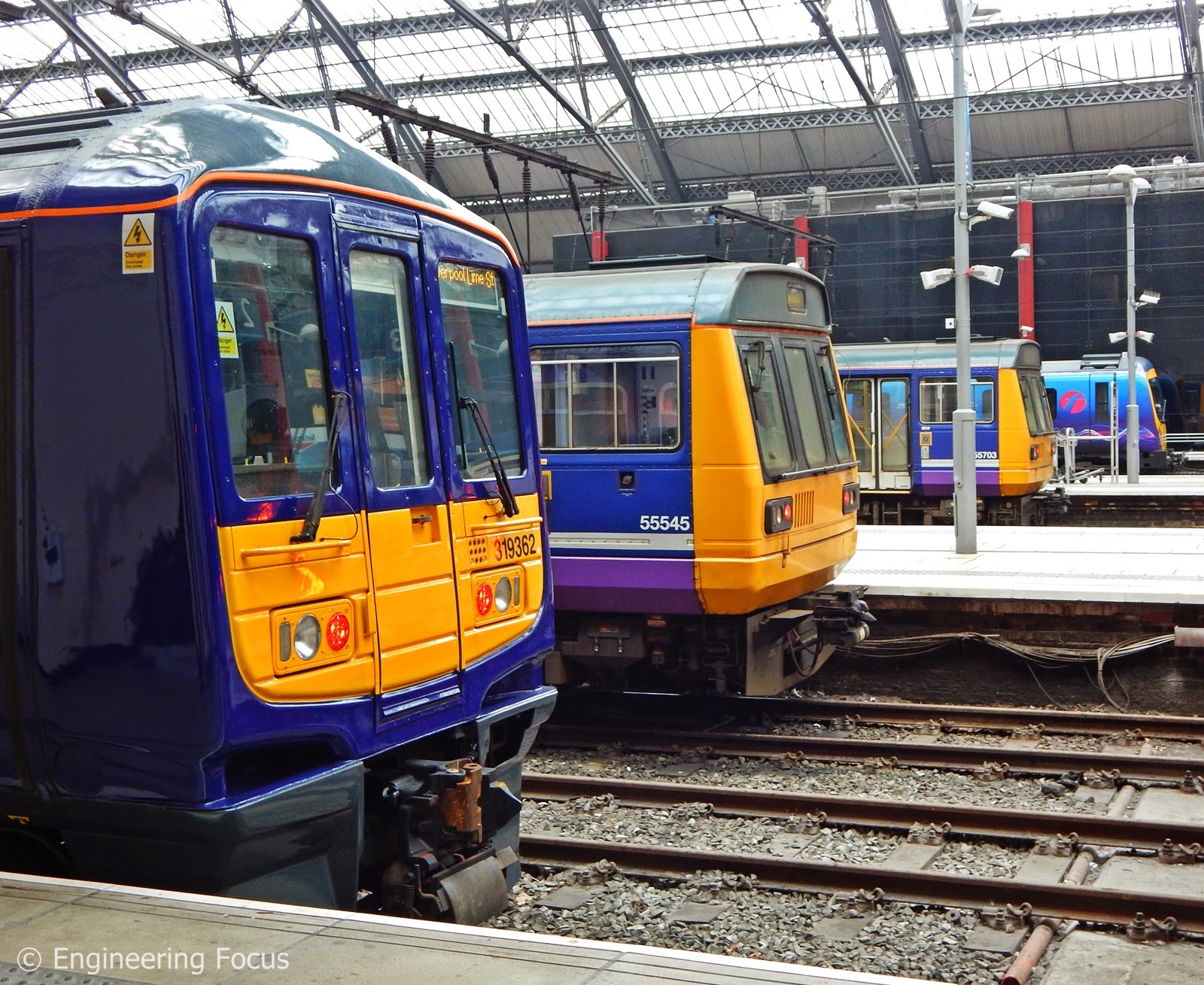
Even in late 2018 Halligan could of stood in Liverpool Lime St and explained that it had recently undergone a huge upgrade (part of a wider £340m investment in the Liverpool City region), next to a recently refurbished electric class 319 with 4 cars, which are quiet and spacious, and a world away from the Pacers which are being phased out. But no, the focus was on the old Pacer and the unhappy passengers who have had to endure them for decades.

Longer platforms at Liverpool Lime St
 

I didn't really want to get drawn into writing about the Dispatches documentary, but it is programmes and news stories like this that really annoy me. Forget the tenuous HS2 or Northern investment argument, what gets my back up is mainstream media's continued insistence on focusing only on the negative when it comes to the railways despite of the facts, which are clearly there for all to see.

Refurbished class 319 at Liverpool Lime Street 
Now I know new and refurbished trains won't make up for the lack of investment in the North but they will go a long way to providing passengers with the modern, fast and reliable service that they deserve. With Pacers gone, maybe class the class 150s, which despite being fully refurbished, will themselves be over 30 years old, will be the mainstream media's next target. One thing is for sure attacking train operating companies over the how old their trains are and calling for HS2 to be cancelled will not mean that Northern Powerhouse Rail is built any faster.


Below are just a few links to blogs that I have written about improvements in the North that are already, or will soon be benefiting passengers


Follow me on Twitter and Facebook

For more information
e-mail info@EngineeringBlog.co.uk


Friday, 22 June 2018

RailLive Special - Class 769 Flex by Porterbrook

This third in a series of "RailLive special" posts features yet more recycling or what could be more accurately described as upcycling, as Vivarail is not the only company to have seen the benefits of converting redundant electric trains to run on other forms of power.

Porterbrook has been developing its own bi-mode (or in fact tri-mode) units for a number of years and last year it was announced that Arriva Rail North (Northern) had ordered 8 of what were branded "Flex" trains, which now have a TOPS classification of 769

The Flex units are being converted from class 319s all which have been sent off lease from Thameslink and Southern. Some 319s  were sent north to operate on recently electrified lines between Manchester, Liverpool and Preston, with the first refurbished 319 entering service between Liverpool and Manchester in 2015. However the majority of the 319s are now surplus to requirements.

769 000 already painted in Northern colours 

The Flex units are being described as "Tri-mode" as they will be able to draw power from 750v DC third rail and 25kV overhead lines whilst also being able to operate under their own power on non-electrified lines.

Each 4 car train will have 2 6 cylinder diesel engines provided by MAN placed underneath each driving vehicle, the engines will be used to generate electricity to power traction motors. Each horizontal 6 cylinder engine will produce 390kw and will comply with the latest EU Stage IIIB emission standards.

The horizontal 6 cylinder 13 Litre engine provided by MAN

Since the initial order of 8 units for Northern was confirmed a further 24 units have been ordered, 19 for Great Western Railway and 5 for Arriva Trains Wales. The 5 units originally ordered by ATW were destined for South Wales and despite the announcement that KeolisAmey will take over the Wales and Borders franchise the current plans do not seem to have changed. 

It is understood that GWR will use 769s on Reading - Gatwick Airport and Reading - Oxford routes. This will allow GWR to re-deploy class 165/166s to the Bristol area.

5 years ago it was thought that demand for diesel multiple units (DMUs) would decrease rapidly and that the routes on which the class 796s will operate would be electrified. But with cancellations and delays to electrification schemes the rail industry found itself with a potential shortage of rolling stock and crucially DMUs.

Whilst it is true to say that train operating companies have suffered from a shortage of DMUs for a number of years, the problems facing the rail industry over the next 1 to 3 year could have been much worse. With public pressure to remove Pacers from service completely, electrification woes and new disability standards which mean many DMUs will have to be modified by 2020 to comply with PRM TSI standards all having an affect on the availability of units. 


That is if companies such as Porterbrook and Vivarail hadn't spotted the potential problems facing the industry and decided to take a risk and invest in developing solutions which could be deployed relatively quickly and were cost-effective in the short to medium term. 

The class 769s and 230s will allow class 15Xs to be sent off lease to be modified to comply with PRM TSI standards and will fill a gap left by the delays and cancellation of electrification schemes. Both trains will be able to operate on electrified and non-electrified lines so no services will have to terminate where electrification ends or mean that DMUs are running for long periods along sections of railway that have been electrified. 

It is hoped that passengers will see the benefits of these new units within the next 12 months and I'm fairly certain they will not notice that they will be riding on upcycled trains. 


There was a huge amount to see at year's RailLive organised by Rail magazine so I have a number of posts planned covering innovation and technology. This year in particular there seemed to be a lot of innovative products on display and brand new never before seen technology. So if you follow Engineering Focus on social media or click the "subscribe by e-mail" link you won't miss out on any of the latest content over the next week. 


Follow on Twitter and Facebook

 For more information 
e-mail Blog@EngineeringFocus.co.uk
Call: 07393 565 863


Friday, 28 August 2015

Northern stock - all change

Update December 2015

On the 24th August (2015) the BBC reported Commuter groups angry at train 'cuts' from North West. The shock headline felt like another blow for passengers in the North who have already seen trains move south.

In May (2015) First TPE lost 5 of it's class 170s which are owned by Porterbrook Leasing to Chiltern Railways. In total FTPE will lose 9 of it's 170s, however an agreement was reached which meant that FTPE could keep hold of 4 170s until February 2016.

First TPE 170 stand at Manchester Airport March 2014


In the meantime FTPE have subleased 6 class 156s from Northern rail in order to provide services between Manchester Airport and Blackpool North. Class 185s have in turn moved to services between Manchester and Hull via Leeds in order to make up for the loss of 170s.

Northern has benefited from the arrival of refurbished 319s which are operating on newly electrified lines between Liverpool Manchester and Preston, however Northern has been forced to hire loco hauled trains due to shortages.

Northern class 319 on the first day of electric services between Liverpool and Manchester


2, 4 coach Mk2 sets hauled by class 37s have been leased from DRS to provide services on the Cumbrian coastline. This in turn released a unit to provide an hourly service between Manchester and Burnley over the recently reopened Todmorden Curve.

Despite First TPE introducing 10 brand new class 350s on it's Manchester to Scotland service, the loss of 5 170s has meant a lot of timetable and unit reshuffling. The reshuffle is only a short term measure and it is uncertain what will happen after February 2016 when a further 4 170s move to Chiltern. 

So it it would seem understandable then that commuter groups should feel angry at the loss of 17 electric trains from Northern. The 323s are currently used on a number of services including Manchester Piccadilly to Crewe via Manchester Airport and Manchester Piccadilly to Hadfield.

What the BBC report does not say however is that the move is not due to take place until 2018/2019.

Porterbrook Commercial Director Olivier Andre told RAIL on August 25: “All the bidders for the Northern franchise have access to the Class 323 until 2018/2019. source Rail

London Midland 323 leaving Crewe

It's not all good news for London Midland either, as in December this year (2015) 7 of it's class 321s will be moving North to Scotrail to provide services between Glasgow Central and Lanark.  London Midland will make up for this loss by leasing class 319s which are being cascaded from Thameslink services. 


The reason for this shuffling of stock is due to the fact that both the First TPE and Northern franchises are due to come to an end in February 2016. In fact they were supposed to end in March this year (2015) but were awarded an extension to 2016. Therefore the companies that lease the trains face uncertainty about the future of the their rolling stock. 

It is for this reason that Porterbrook has chosen to lease it's trains to an operating company who can offer more long term certainty. Chiltern in Contrast to Northern and First TPE has a franchise agreement which extends to 2021.


The report does go on to say that "A spokesman from the Department of Transport said they would bring in "at least 120 brand new carriages".". This of course is good news for the North, however it will not solve the capacity problem in the short or medium term.  The 120 new diesel units which will not be available for several years are intended specifically to replace the unpopular Pacer units operated by Northern of which it has over 100. 

A quick tally of what we know so far about train movements and new trains promised by the government gives the North a potential overall loss of 3 carriages by 2020, assuming the north retains 319s and 15Xs which will be getting on for between 30 and 35 years old by then.

[Edit] Table adjusted to take into account number of carriages rather than simply the number of train units 

click to enlarge


It's taken a lot of investigation and this is an evolving situation. If you spot a mistake or have an update feel free to comment or e-mail Blog@EngineeringFocus.co.uk


Follow Engineering Focus

Thursday, 5 March 2015

Northern goes electric

Today (05/03/15) was a significant day for commuters from the North West as Northern Rail officially launched electric services between Liverpool and Manchester.  For the majority of commuters it will be just a normal day, they may notice the freshly painted train waiting for them at the platform, they may notice the lack of engine noise and the fresh new interiors. But for the many they will be surprised to find a seat, apart from this their day will go on as normal.

For businesses, Northern Rail, transport workers and enthusiasts however this is a momentous day. The culmination of years of hard work by Network Rail, Northern Rail and those who have lobbied for electrification over the years.

The electrification of the line between Liverpool and Manchester, and the introduction of new electric trains is just the start of a programme of electrification which will benefit millions of commuters across the region as other lines go live. 

Liverpool, Wigan, Preston and Blackpool services are all due to go electric over the coming years, with electric trains steadily heading north for refurbishment and introduction on Northern routes. For more information about North West electrification click here

The trains

The electric services themselves may be new to the region, but the trains are not. In fact the class 319s that are being introduced have been in service in London since the 1980s. This has lead to accusation by some that the trains are "cast offs from the south"

I'm delighted to say however, that they certainly do not feel like "cast offs". The trains are a world away from the diesels that they are replacing. All trains entering service with Northern will be refurbished and given a new coat of paint making them look fresh and modern.

The trains on the inside are not what you would describe as luxurious, there are no tables and have 3 + 2 seating in places, however they are ideally suited for carrying people the short distances into Manchester and Liverpool in relative comfort.

The seats are comfortable enough and the ride is quiet, apart from the odd clatter from an air compressor. The train feels comfortable at speed with none of the engine noise of the older diesels and with very little buffeting.

The ride is now comparable with the more modern diesel trains used by Trans Pennine Express, with the only draw back being a lack of tables. Otherwise there is nothing to choose between TPE's modern diesels and Northern's electric trains if you're travelling between Liverpool and Manchester.


Perhaps it would be nice if we in the North received new electric trains, but the new electric services being introduced provide a step change in comfort, capacity and hopefully speed that should not be scoffed at.


Latest blog post

HS2 Bridges and Viaducts Engineering Challenges

A version of this article was published in RAIL Magazine issue 1040 Construction of the 220km (140 mile) long HS2 route between London and ...